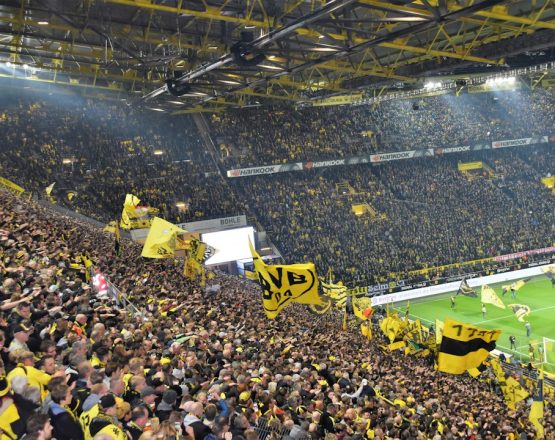
Europa League Predictions: Reading the Group Stage and Knockouts
The UEFA Europa League is one of the most unpredictable club competitions in world football. From surprise eliminations to late dramatic turnarounds, the tournament regularly delivers matches that challenge even the most careful analysis. This article walks through how to approach Europa League predictions from a football intelligence standpoint — covering form, tactics, historical patterns, and what the common markets actually measure.
Table of Contents
Why Europa League Fixtures Are Harder to Analyse Than Domestic League Games
One of the first things to understand when looking at Europa League predictions is that clubs approach this competition very differently depending on their league position at home. A side sitting mid-table in their domestic league may field a near full-strength squad for a Europa League group fixture, while a club chasing a league title might rotate heavily.
This squad management factor means that raw league form does not always translate cleanly to European performance. A team with four domestic wins in a row could appear far less competitive in Europe if their manager rests key forwards, defensive organizers, or the goalkeeper who has been keeping clean sheets.
Tracking confirmed starting lineups — often released an hour or so before kickoff — becomes particularly important in this competition. Formation changes are also more frequent, with coaches sometimes adapting to the two-legged knockout format in ways that make single-match analysis more complex.
Form, Fixtures, and the Europa League Group Stage
During the group stage, Europa League predictions often centre on identifying which clubs are using the competition as a development platform versus which sides are genuinely targeting a deep run. Clubs from smaller domestic leagues — such as those from the Czech Republic, Greece, or Scotland — sometimes enter with fewer rotation options, meaning their strongest eleven is relatively consistent from match to match.
Clubs from the Premier League, Serie A, or La Liga, on the other hand, frequently have a secondary squad capable of competing at this level. That depth can either be an advantage or a vulnerability depending on how settled that secondary unit is.
Head-to-head history in European competition is worth examining, though it should be treated with caution. A result from six or seven years ago between two clubs involved very different squads, managers, and tactical systems. More relevant is recent European head-to-head data — particularly from the last two or three seasons — combined with an understanding of current squad strength.
Home and Away Dynamics in the Europa League
Unlike domestic leagues, the Europa League often involves clubs playing in unfamiliar environments. Travelling to eastern Europe, playing on artificial pitches in Scandinavia, or facing a passionate lower-league crowd in front of a compact stadium can all affect a visiting side’s performance.
Historical data shows that away goals in European competition tend to be harder to come by when the home side is disciplined and organised. Clubs that sit in a low defensive block at home and play on the counter can produce results that look strange when viewed only through a domestic-form lens.
Tactical Patterns That Shape Europa League Outcomes
The Europa League knockout format — two legs with away goals once playing a significant role (though the rule has since been removed) — still influences how managers approach the first leg of any tie. Many coaches prioritise defensive compactness in away fixtures, looking to avoid conceding rather than take risks chasing an early lead.
This tactical caution often affects the Over/Under 2.5 goals market. That market, as a neutral definition, is simply a forecast of whether a match will produce more or fewer than 2.5 total goals. Matches built around defensive structure and transition tend to generate fewer opportunities, which is why knockout Europa League fixtures often see fewer goals per game than group stage matches.
The Double Chance market — which allows a selection across two of three possible outcomes (home win or draw, away win or draw, or either team to win) — is used by some followers of this competition as a way to reflect uncertainty in closely matched ties.
BTTS (Both Teams to Score) is another commonly referenced market, particularly in matches where both sides have shown attacking productivity in domestic football but defensive questions remain. It simply asks whether both clubs will find the net at least once in the ninety minutes.
Injury and Suspension Impact on Europa League Selections
Suspensions accumulate across the competition. A key midfielder who picks up yellow cards across the group stage may miss a knockout fixture at exactly the wrong moment. Following squad news through official club channels and UEFA’s own match documentation is a valuable part of any match analysis routine.
Injuries to central defenders or holding midfielders often have the most visible impact on match results, since those absences affect the structural foundation of how a team operates rather than just their attacking output.
Reading the Markets for Europa League Matches
The 1X2 market is the starting point for most match analysis. It simply reflects three outcomes: home side wins (1), draw (X), or away side wins (2). In European football, draws are statistically more common than in some domestic competitions, partly because away sides often approach matches with greater caution.
When analysing a Europa League fixture using the 1X2 framework, it helps to consider the competitive context. A club that has already qualified from the group stage with a game to spare may effectively field a development lineup, making the standard 1X2 analysis less straightforward than it appears.
Understanding the market is not about financial outcomes — it is about understanding what football question each format is asking, and then using match information to form an opinion based on analysis.
Putting It All Together for a Match Prediction
A well-structured Europa League prediction draws on several layers of information: current squad availability, recent form in both domestic and European competition, tactical tendencies, historical matchups, and the competitive importance of the fixture for both clubs.
No single factor produces a certain outcome. Football remains a sport where unexpected results occur regularly, and the Europa League — with its mix of elite clubs, rising domestic sides, and rotating squads — produces more than its share of surprises each season. The goal of analysis is to build a coherent picture, not to remove uncertainty.
Frequently Asked Questions
How should squad rotation affect Europa League predictions?
Rotation is one of the most significant variables in this competition. Clubs with deep squads may field entirely different lineups in Europe compared to their domestic fixtures, so confirming team news before forming any prediction is essential.
Does home advantage matter as much in the Europa League as in domestic leagues?
Home advantage still exists, but it can be reduced by travel fatigue, unfamiliar pitch surfaces, and tactical approaches from visiting sides designed around earning a draw rather than attacking freely.
What does the Over/Under 2.5 market mean in a Europa League context?
It is simply a forecast of the total number of goals in a match. If the match produces three or more goals, Over 2.5 is correct. Two or fewer goals means Under 2.5 applies. Knockout ties with cautious tactics often lean toward lower-scoring outcomes statistically.
How relevant is head-to-head history when analysing Europa League fixtures?
Older head-to-head data has limited value because squads and managers change significantly. More recent European meetings — ideally within the last two or three seasons — carry more analytical weight when combined with current form.
What is the BTTS market and when is it relevant in European football?
BTTS stands for Both Teams to Score. It simply indicates whether both clubs scored at least one goal. It becomes particularly relevant in matches where both sides have attacking output domestically but defensive stability has been inconsistent.
Predictions are opinions based on analysis, and no result is guaranteed. This website is for adults aged 18+ and is for information and entertainment only.
Visit BetsPredictions for a full range of football forecasts covering leagues from around the world.